
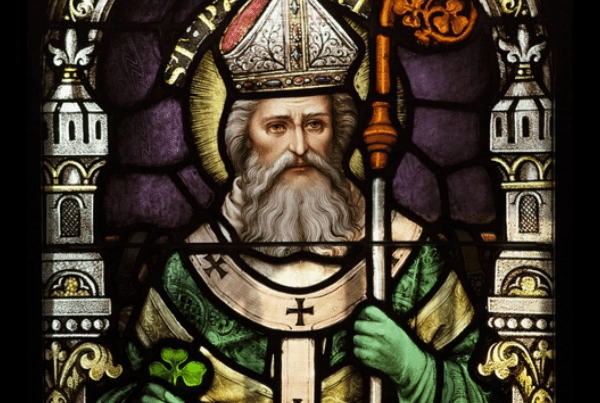
St. Patrick, the patron saint of Ireland, is a figure whose life story exemplifies the transformative power of education and perseverance. Born around 385 AD in Roman Britain, Patrick’s early life took an unexpected turn when he was captured by Irish raiders at the age of 16 and sold into slavery in Ireland.
During his six years of captivity, Patrick underwent a profound spiritual awakening. He turned to prayer and faith, using this time of hardship as an opportunity for inner growth and learning. This period of reflection and self-education would later prove crucial in shaping his future mission.
After escaping slavery and returning to Britain, Patrick dedicated himself to formal religious education. He studied for the priesthood and was eventually ordained. This commitment to learning and self-improvement highlights the importance of education in overcoming adversity and pursuing one’s goals.
St. Patrick’s Educational Mission
In 431 AD, Patrick returned to Ireland as a missionary, armed with the knowledge and skills he had acquired through years of study. His mission was not just spiritual but also educational. He sought to bring literacy, learning, and new ideas to a largely pagan society.
Patrick’s approach to teaching was innovative and effective. He used familiar objects to explain complex concepts, most famously employing the three-leaved shamrock to illustrate the Christian concept of the Holy Trinity. This method of using relatable examples to convey abstract ideas is a cornerstone of effective education, still practiced in classrooms today.
Legacy in Education
St. Patrick’s impact on Irish society was profound. He established churches and monasteries that became centers of learning, preserving knowledge and culture during the Dark Ages. These institutions played a crucial role in the spread of literacy and education throughout Ireland and beyond.
Connecting St. Patrick to Modern Education
Today, St. Patrick’s legacy continues to inspire educators and students alike. His life story teaches us several valuable lessons:
- Resilience in learning: Patrick’s transformation from slave to scholar demonstrates the power of education to change lives.
- Innovative teaching methods: His use of the shamrock as a teaching tool reminds us of the importance of creative, relatable instruction.
- Cultural exchange: Patrick’s mission brought new ideas to Ireland, highlighting the value of cross-cultural learning experiences.
- Lifelong learning: From his time as a slave to his years of religious study, Patrick exemplifies the importance of continuous education throughout life.
As we celebrate St. Patrick’s Day on March 17, we can reflect not just on the cultural festivities, but also on the educational legacy of this remarkable historical figure. His story serves as a reminder of the transformative power of education and its ability to bridge cultures, inspire change and shape the course of history.
 NLCS Jeju Libraries
Leave a comment